Building Dx
An AI Clinical Assistant
0 → 1
Clinical Decision Support tool

Project overview
Project overview
Project overview
The team
The team
Team : 02 Product designers
My role : Research , UX Design lead , Quality Assurance
Date : July 2023 - Present
Stakeholders : Chief Product Officer , VP (Technology) , 02 Product Managers , 02 Doctors (SME)
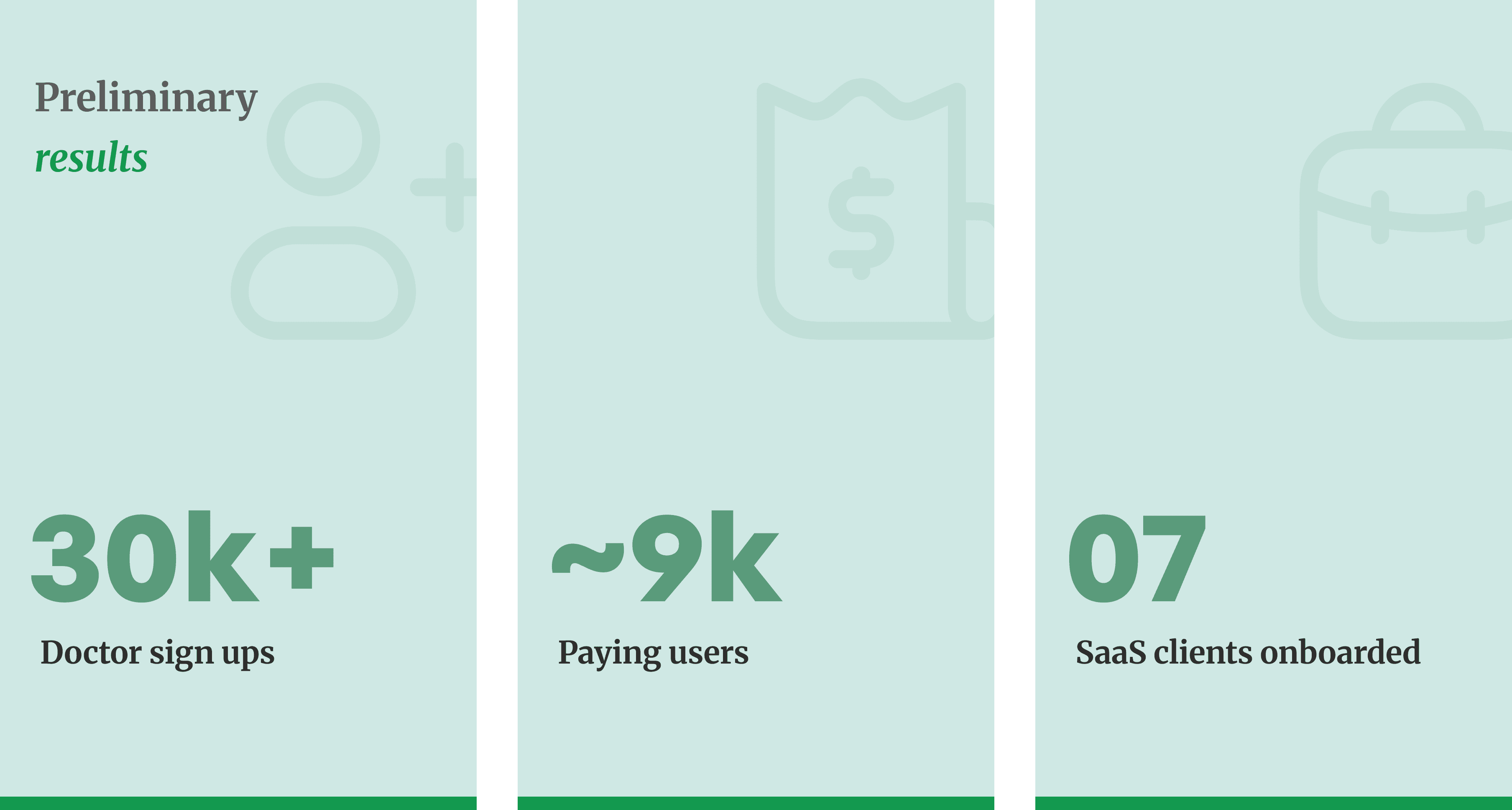
Outcome : 30,000+ Sign-ups , ~9,000 Subscriptions, 07 SaaS clients onboarded (Following soft launch)
Team : 02 Product designers
My role : Research , UX Design lead , Quality Assurance
Date : July 2023 - Present
Stakeholders : Chief Product Officer , VP (Technology) , 02 Product Managers , 02 Doctors (SME)
Outcome : 30,000+ Sign-ups , ~9,000 Subscriptions, 07 SaaS clients onboarded (Following soft launch)
About Dx
About Dx
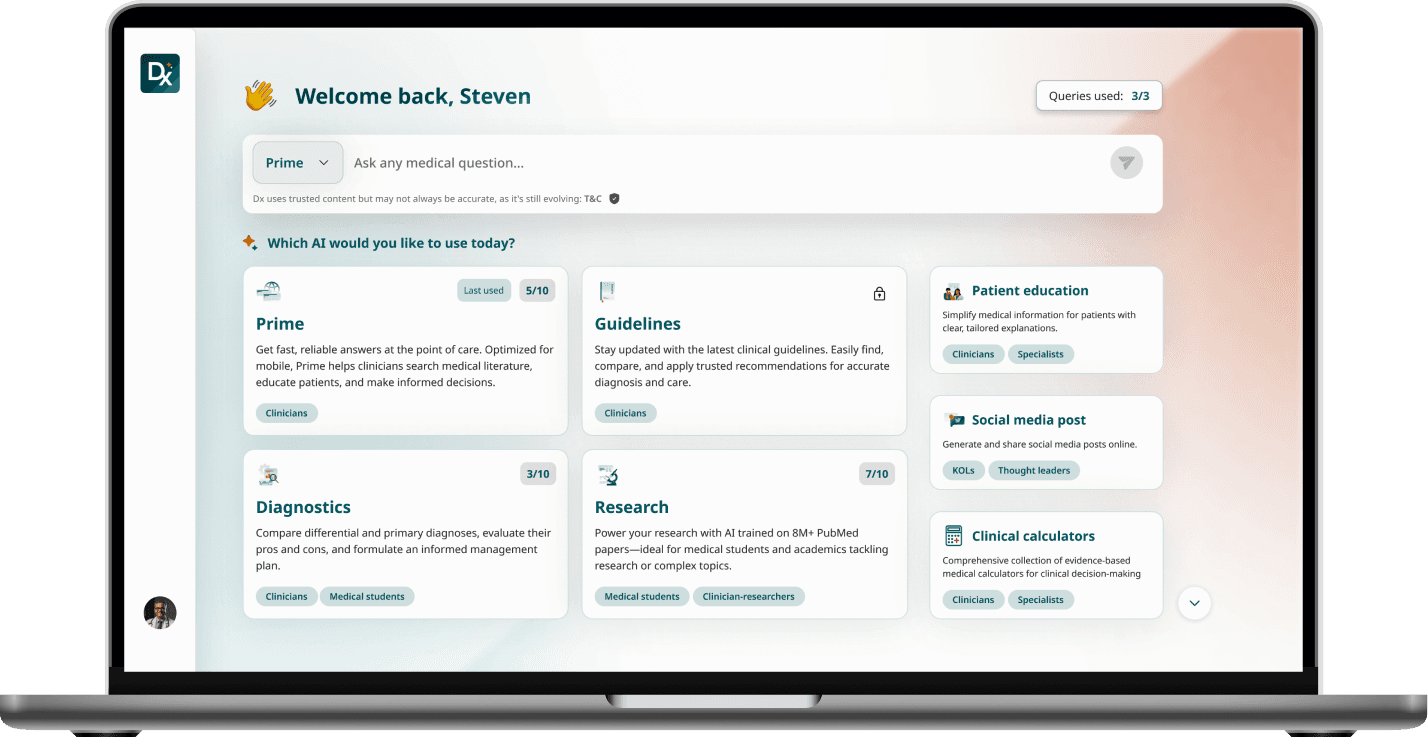
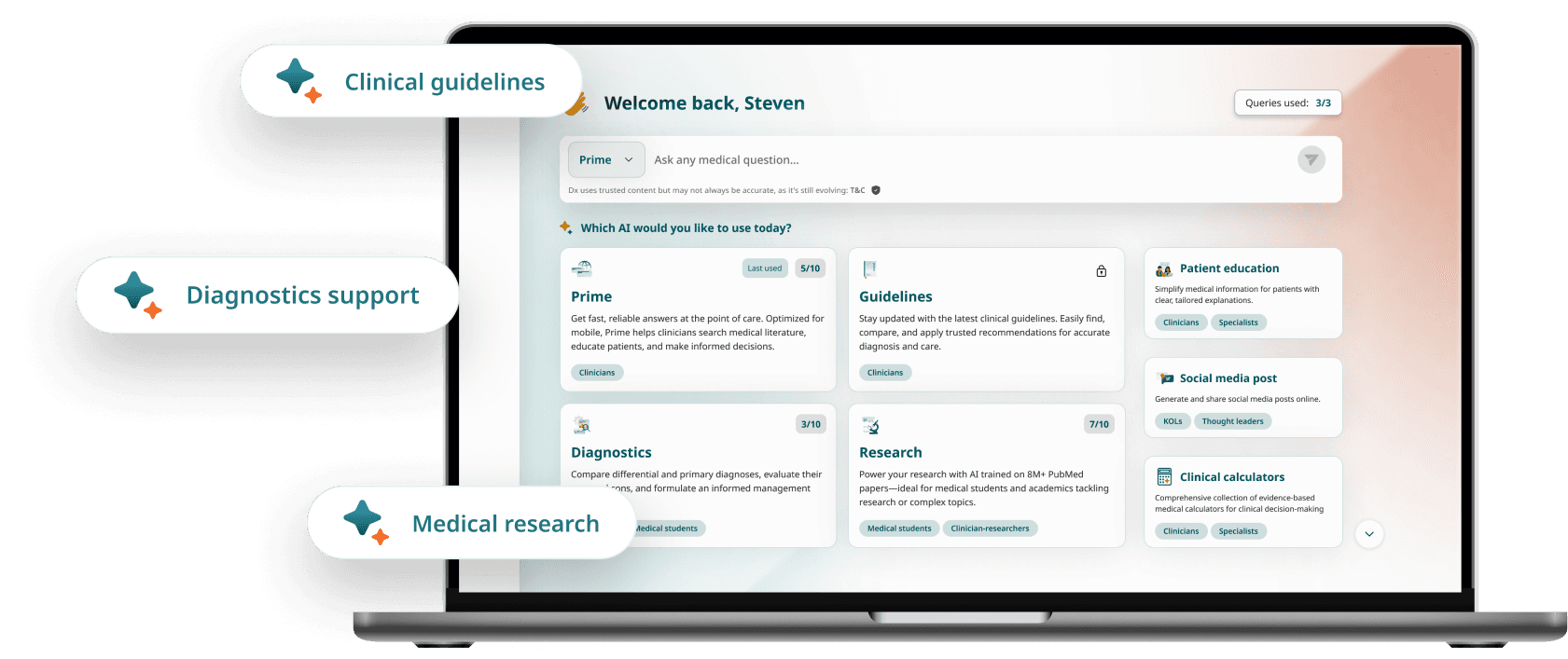
Doctors make hundreds of decisions a day — under time pressure, with incomplete information, and little room for error. Dx is Docquity's answer to that challenge. An AI-powered clinical assistant housing 7 specialised agents, Dx supports clinicians across the full spectrum of their daily work, from staying current with medical literature to making faster, more confident clinical decisions. Learn more
Doctors make hundreds of decisions a day — under time pressure, with incomplete information, and little room for error. Dx is Docquity's answer to that challenge. An AI-powered clinical assistant housing 7 specialised agents, Dx supports clinicians across the full spectrum of their daily work, from staying current with medical literature to making faster, more confident clinical decisions. Learn more
Kindly view this case study on a desktop / laptop for optimal experience.
Thank you for understanding!
Kindly view this case study on a desktop / laptop for optimal experience.
Thank you for understanding!
The Dawn of a new era
With the world of technology disrupted by the launch of OpenAI’s ChatGPT, Docquity — like every other tech company began playing around with this new sandbox that had been thrust upon us all.
The 2 questions that kickstarted this project

Question #1
How could we introduce the capabilities of Generative AI to the Healthcare industry?

Question #2
Was it something a Healthcare professional really needed?
Conversations with our potential userbase
To answer these questions, we planned out a research exercise where we interviewed Healthcare professionals over the span of 02 weeks.
Research plan
User interviews (Online + Offline)
Participants: 04 Doctors, 01 PHD Student
Duration: 60 mins per interview
Interviewers: Rishikesh
The goal
Understand how a Healthcare professional uses the internet for their work and identify areas of opportunities.
Get a sense check of how they perceive AI and
GPT tools.
Observations & Findings
Core goals
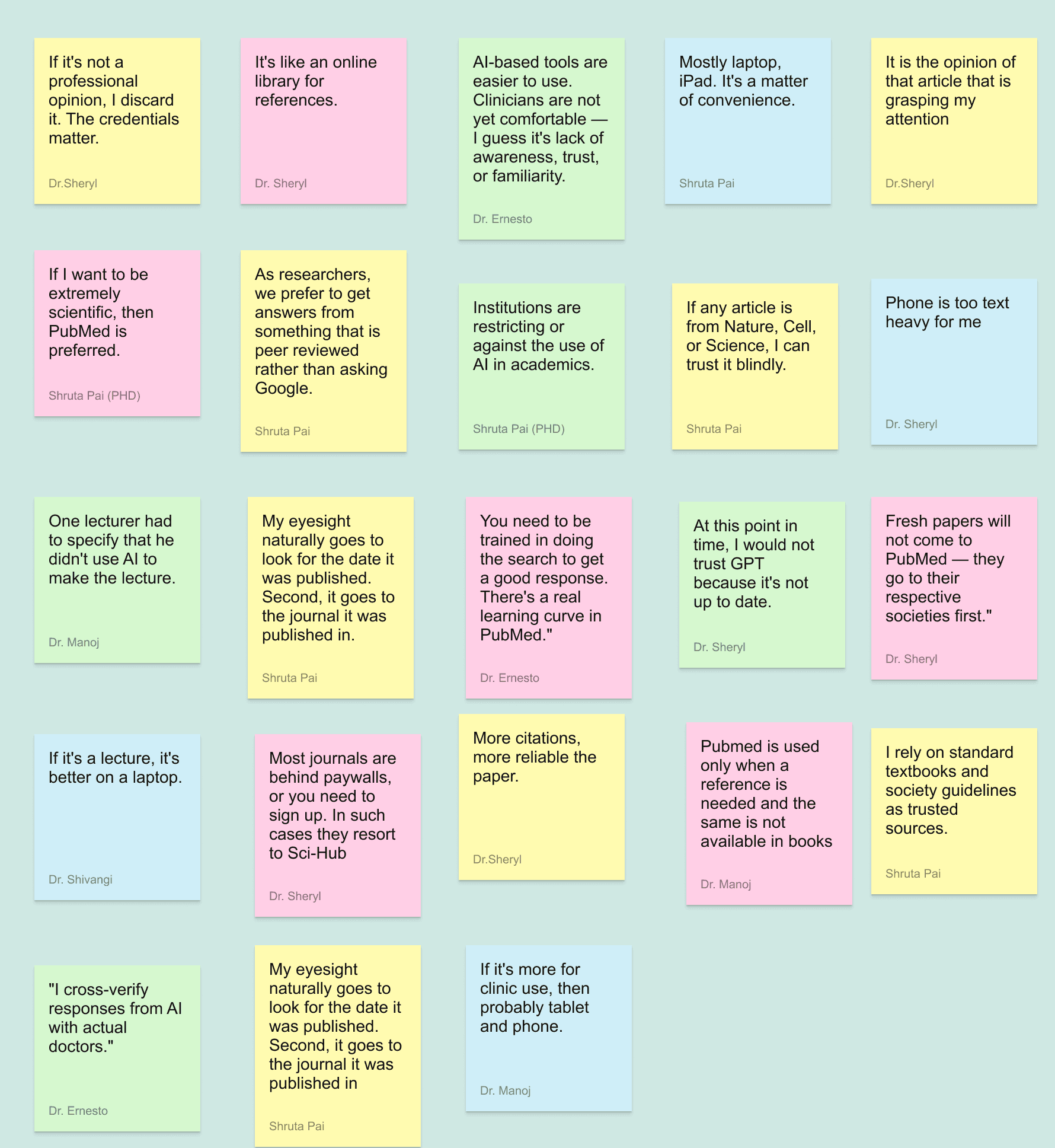
The primary driver for using research tools like PubMed is finding citable references for academic reports and papers; not clinical decision-making.
Practicing clinicians lean on standard textbooks and society guidelines for patient treatment.
Areas of Opportunities
Based on the interviews conducted, a doctor turned to online tools for the following use-cases:
Academic research and content writing
Clinical practice
Tools used
Google, PubMed, SciHub*, Respective medical societies for textbooks & latest guidelines.
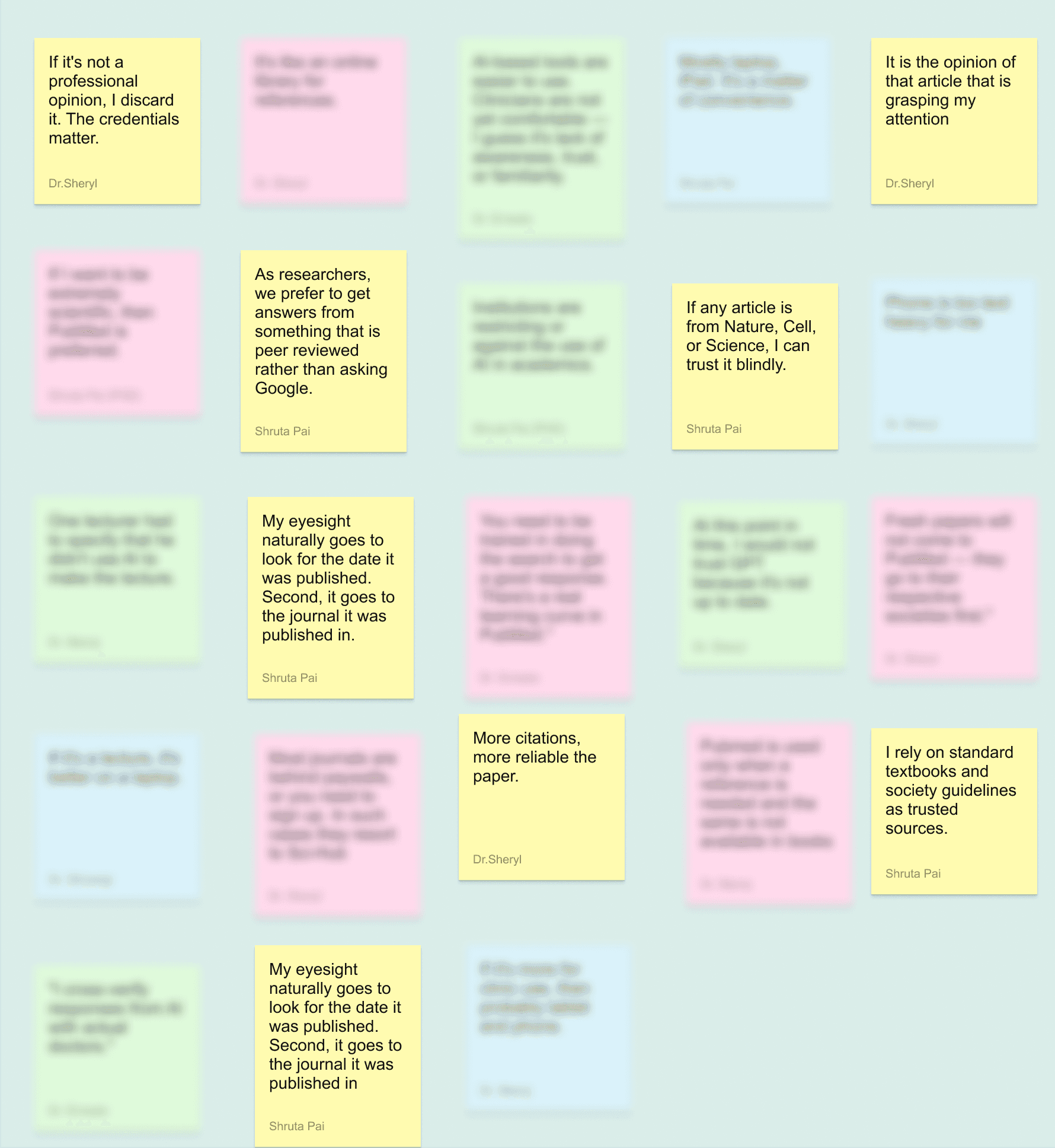
What makes a good source?
Journal reputation
If a journal has good credibility, they blindly trust it; others defer to society-affiliated journals.
Number of citations
More citations = more reliable (notably, PubMed doesn't show this, which is a real gap)
Recency
Most prefer articles within the last 5–10 years; "my eyes go to the date first"
Author credentials
Institution, first/last author reputation.
Type of study
Meta-analyses and review articles are preferred over single studies.
Free/full text availability
If the source is paywalled, SciHub is the workaround.
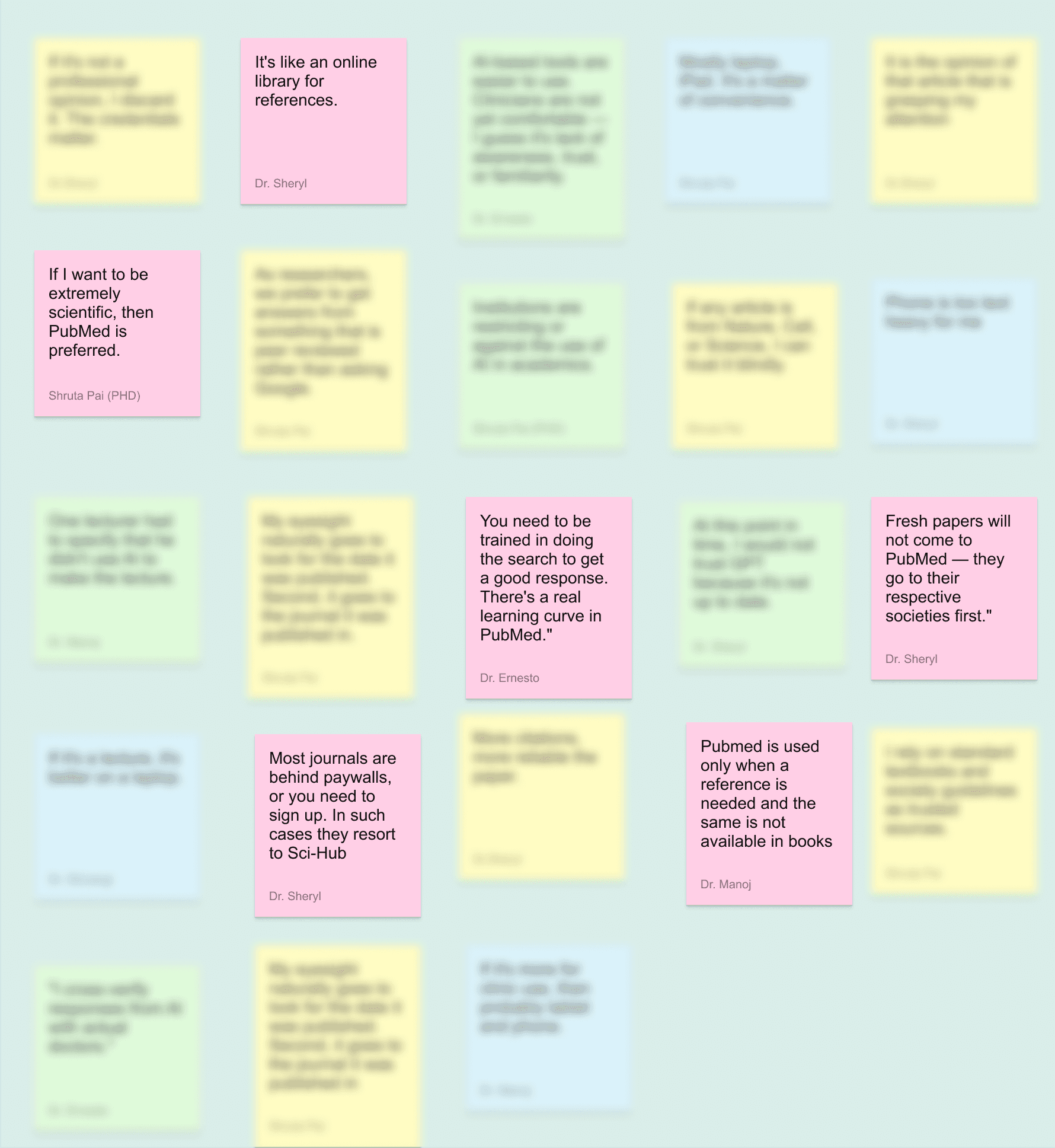
The duality of PubMed
The Good
Large database of journals
It is free, easy to access and convenient
Reputable, Relevant and Evidence based
The Bad
Difficult to learn to use their search. It requires training
Text heavy UI
Search retrieval is not reliable. If users are not specific with their search,
it can fetch irrelevant articlesMost journals are behind paywalls or subscriptions
Pubmed does not have number of citations
It may not be super up to date because fresh papers will not come to pubmed
but rather their respective societies
Academic research and content writing
Research time is high for unfamiliar topics
Sometimes one paper requires 20-25 references. Researchers need to go
through 100’s to cherry-pick the right onesMore often than not, just adding snippets of references is not enough.
They need to upload the entire journal for citations
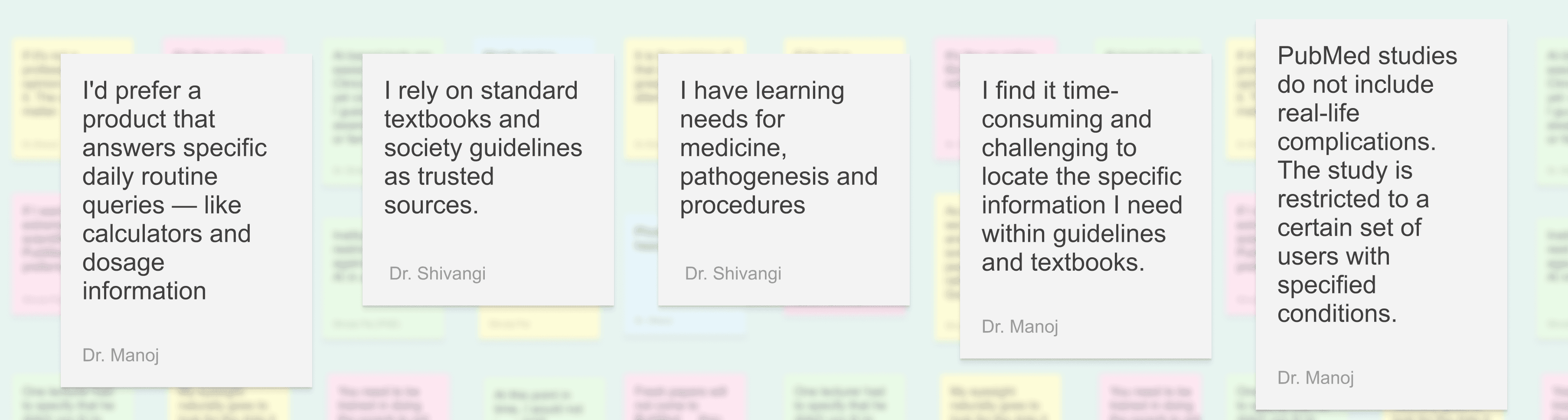
What matters most in Clinical practice
Drug information
Treatment protocols
Diagnostic guidance
Procedure references
Comparative drug data
Pathogenesis
Society and association guidelines
The gap
Retrieving context-specific information from books and guidelines is rather time consuming
Some guidelines are country / region / population specific
No single authoritative source for everything
Textbooks go out of date, but guidelines are hard to track
Drug and dosage information is scattered
Real-world clinical complexity isn't captured
How might we
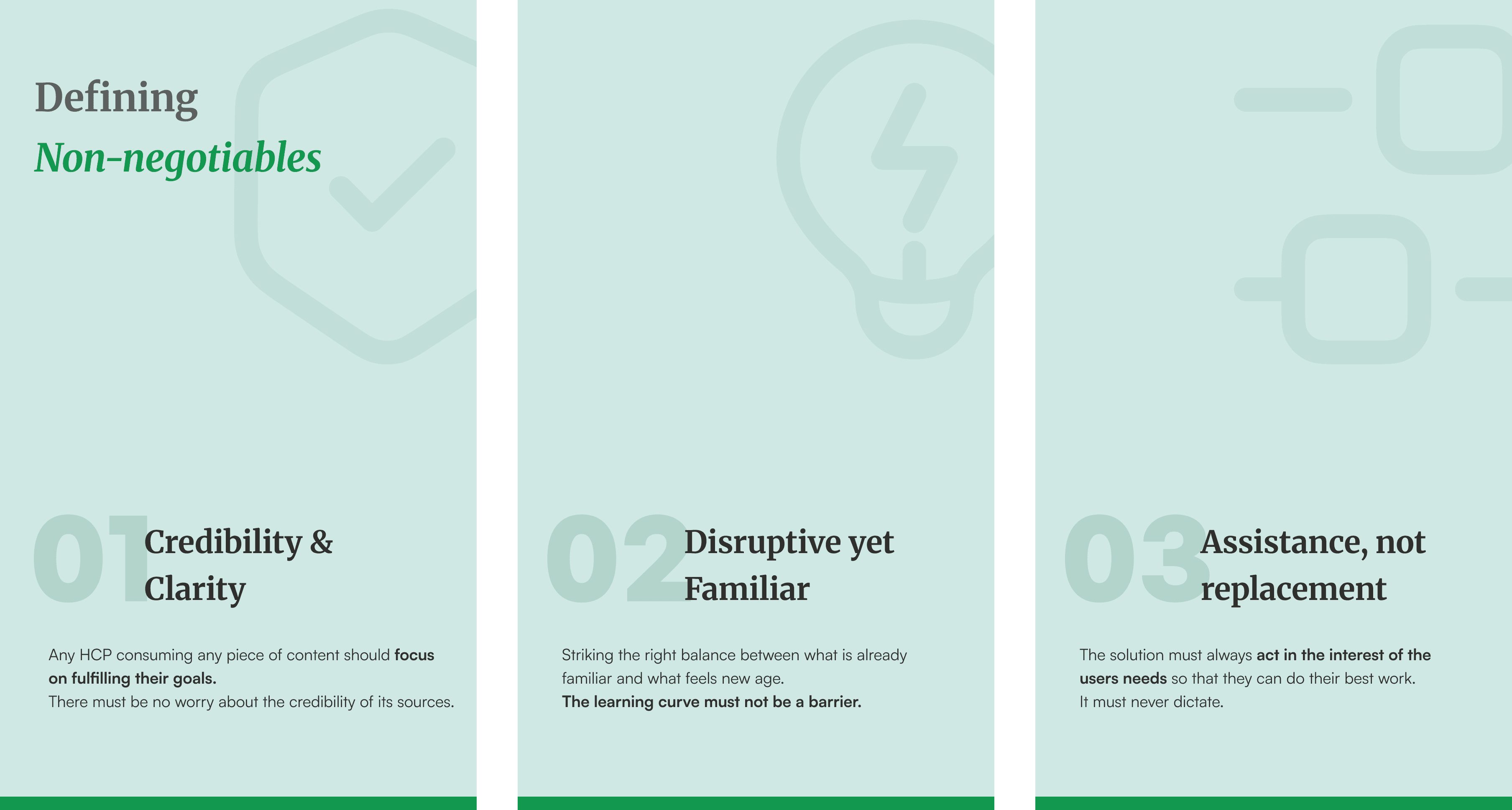
Support doctors with Generative AI to enhance care while ensuring trust, credibility and efficiency?
Question #3
Were we headed in the right direction?
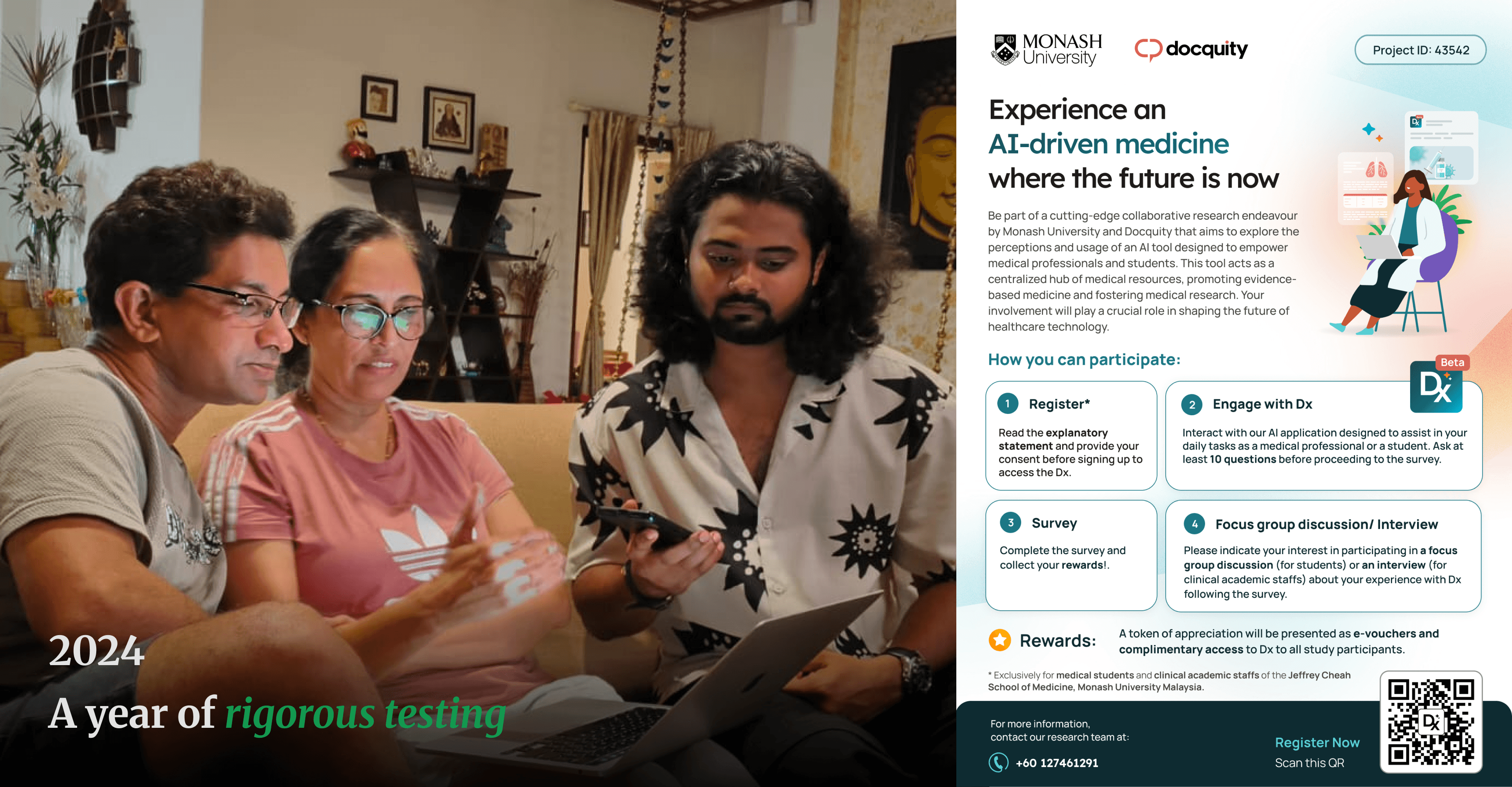
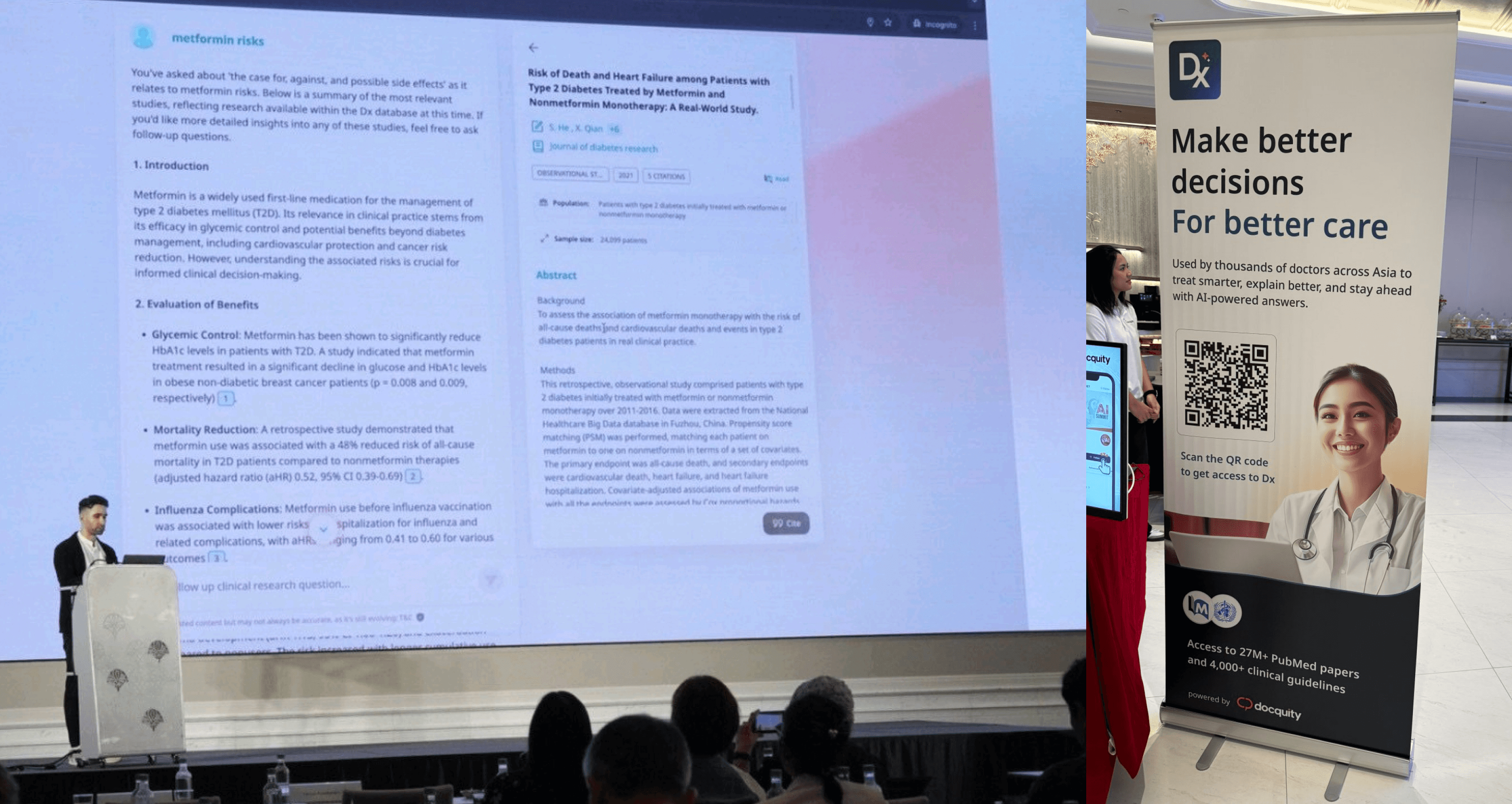
Testing out the MVP
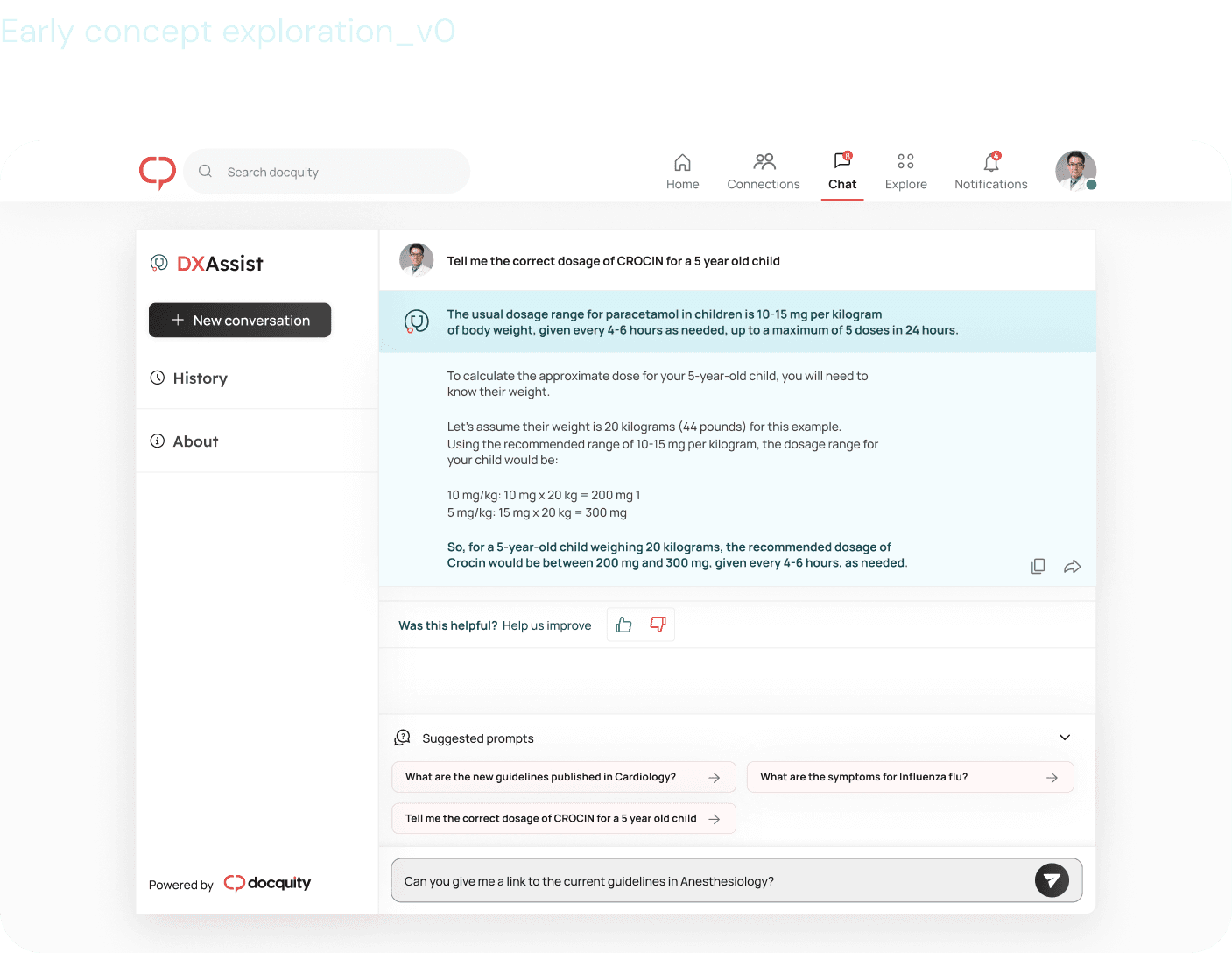
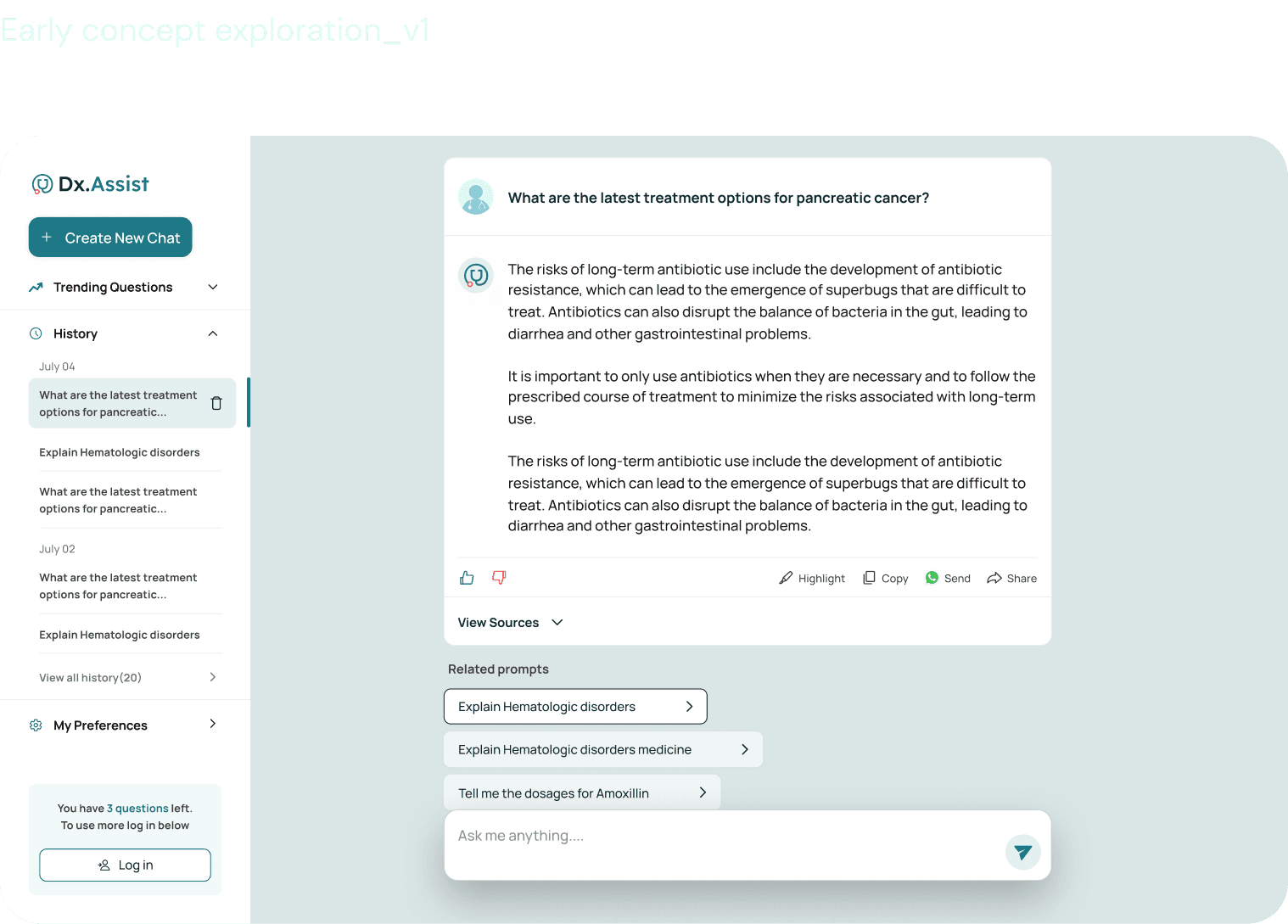
By the end of Q3 in 2023, we had a working prototype that we could start showcasing to understand if it was meeting a doctors expectations.
Participants included in-house doctors, social contacts and users from various online communities.

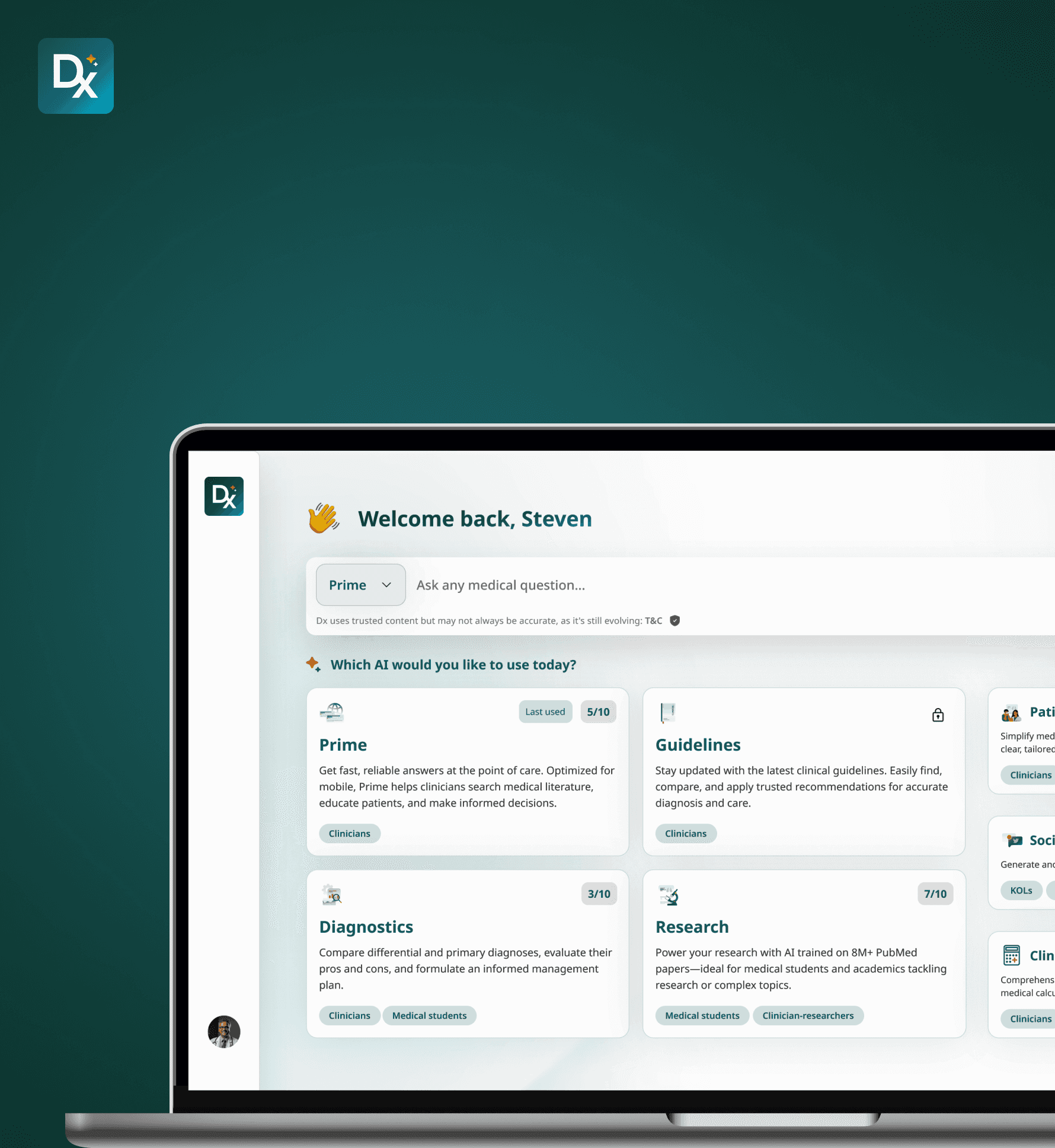
Meet Dx
A versatile solution built to cater to the most important tasks in healthcare
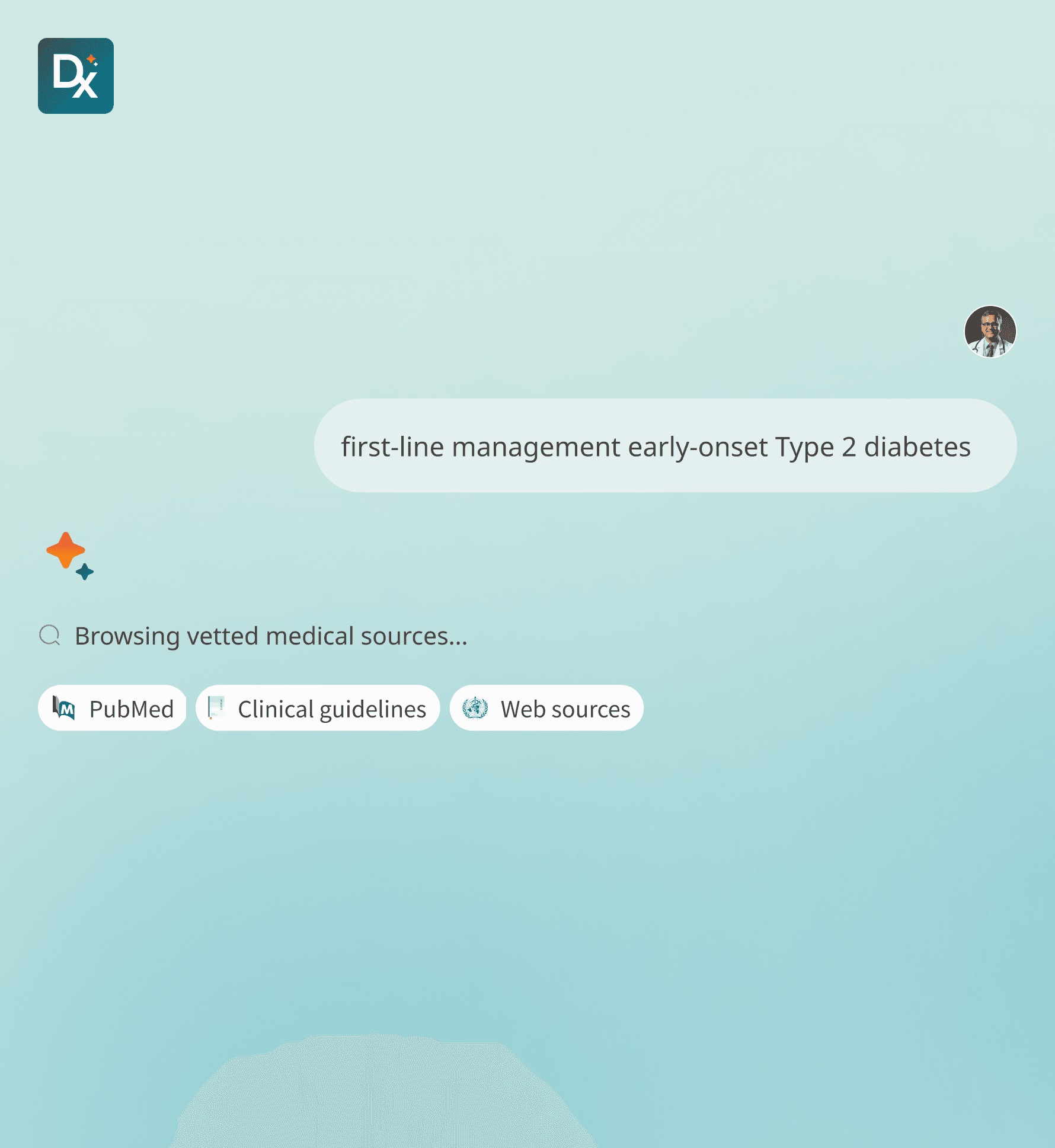
Credible, Contextual and Accurate
Built using a library of
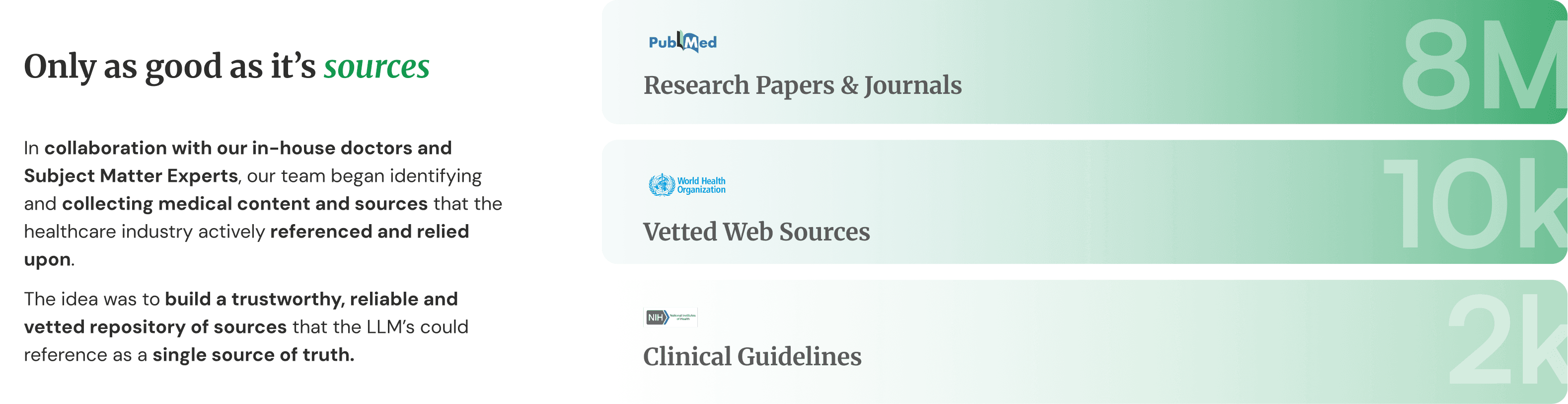
28M+ research papers, 6000 guidelines and thousands of web sources
Designed for versatility
Packed with capabilities to facilitate every aspect of your clinical practice
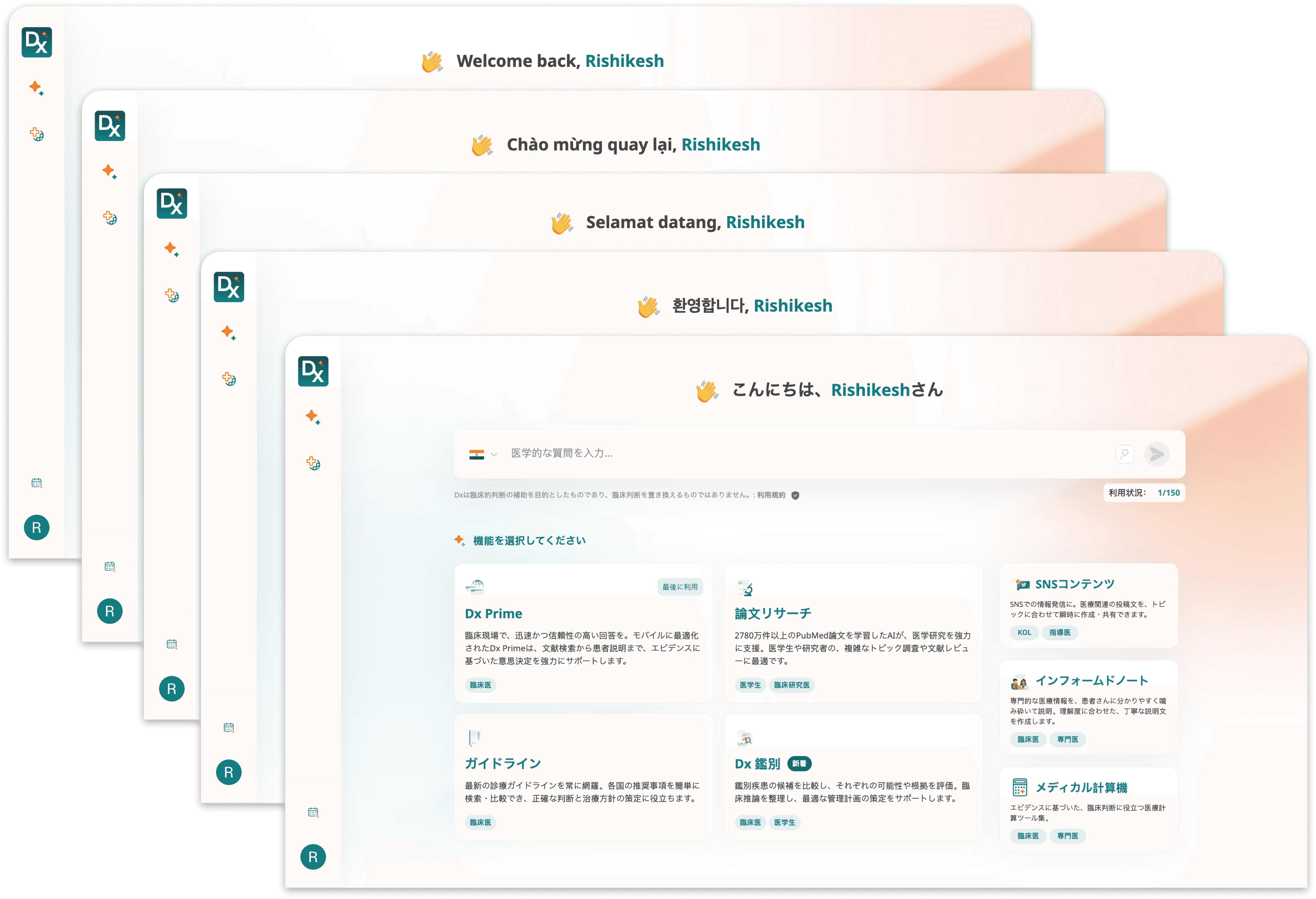
Multilingual Support
Available in 05 languages across South-east Asia